Chronicle

    750 YEARS OF PARNDORF - Information on the Chronicle and the Anniversary Year
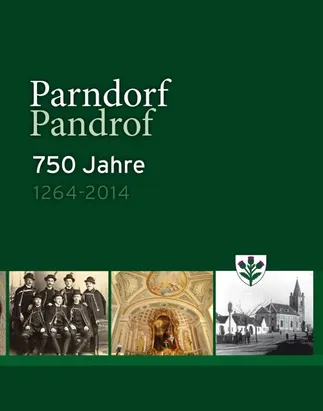
    Ein grüner Umschlag mit dem Text 'Parndorf Pandorf 750 Jahre 1264-2014'. Drei Bilder werden gezeigt: eine Gruppe von Männern in Uniform, ein Kircheninneres und eine Straßenszene.

    Parndorf Chronicle


    The past awakens, it comes alive as soon as you immerse yourself in it…,


    The time has finally come!Work on the Parndorf Chronicle has been underway intensively since 2011, and as part of the celebrations for the 750th anniversary of our municipality, the more than 400-page, freshly printed work will now be presented.
    In recent years, the core team around Sepp Gmasz has researched and compiled documents, stories and events almost daily in various archives, such as the State Archive, the National Library, the Burgenland Provincial Archive, the Parndorf Parish Archive, the Budapest State Archive and the National Library in Bratislava.


    The literature search in the State Archive, with 400 boxes of files, many of them from the Harrach family archive, proved to be very laborious for the team. Far less laborious and dusty, but lively and informative, were the conversations and meetings with the people of Parndorf. Many residents opened their private archives and shared memories. The result is remarkable: the chroniclers were able to collect and catalogue 400-500 pictures. A veritable snowball system of informants developed during the research phase.


    The stories and events that the people of Parndorf were able to pass on here, together with documents from the various archives, now form a continuous overall picture of Parndorf's history over time, and have, over the centuries, shaped this village into what it is today.
    Contents of the Chronicle

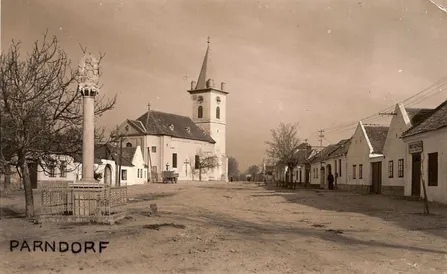
    Ein altes Schwarz-Weiß-Foto einer kleinen Dorfstraße mit einer Kirche und einem Denkmal im Vordergrund.

    Parndorf's geographical border location has always significantly shaped its development, the cornerstones of Parndorf's history and a first insight into the content of the Parndorf Chronicle:


    Julius Faustinus – a Parndorf Roman / The Parndorf Heath / Founding of the village in the Middle Ages / The Harrachs as feudal lords of Parndorf / From deserted village to Croatian resettlement / Border disputes with the neighbours / My Parndorf I (Painters) / Sold, pawned, deserted – the village as a plaything of the powerful / Manorial rule and feudal system / Village life in the 18th century / Turbulent times: wars, epidemics, catastrophes / The Harrach demesne economy / Village appearance and house forms / The Revolution of 1848 and its consequences / In the age of industrialisation and capital / Nationalism. First World War. New homeland / National Socialism and the Second World War / Russian occupation period 1945-1955 / My Parndorf II (Photographers) / History of the Church / Schooling then and now / Everyday life and folk culture / The inns / A new start into the present / Vibrant club life

    The Authors' Team of the Parndorf Chronicle

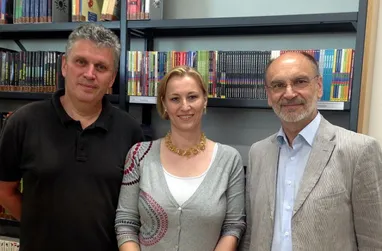
    Drei Personen, zwei Männer und eine Frau, stehen zusammen vor einem Bücherregal voller Bücher. Die Frau trägt eine Halskette und eine Strickjacke. Der Mann auf der linken Seite trägt ein schwarzes Poloshirt. Der Mann auf der rechten Seite trägt einen Anzug.

    The core team (from left to right), consisting of Herbert Brettl, Bettina Dikovich and Sepp Gmasz, has been researching in archives and conducting numerous interviews since 2011. The contributions on the topics of schooling and church were written by primary school headmaster Stefan Bunyai and parish priest Franz Hillinger.


    Mag. Dr. Herbert Brettl
    was born in 1965 in Halbturn, Burgenland. He studied History and Geography at the University of Vienna and wrote his doctoral thesis on "Burgenland Emigration to Argentina".
    The historian has published numerous academic articles and books, including: Sources on the History of Policy towards Roma and Sinti in the District of Neusiedl am See (2007), The Jewish Community of Frauenkirchen (2008), National Socialism in Burgenland. Victims. Perpetrators. Opponents (2012).
    Herbert Brettl has received several awards for his work, including the "Fred Sinowatz" Science Prize of the State of Burgenland (2004, 2012) and the Theodor Kery Burgenland Foundation Grant (2010)

    Mag. Bettina Dikovich
    Born in 1975, resident of Parndorf, studied English Studies and History at the University of Vienna, teacher at the Neusiedl am See Gymnasium for English and History.
    The chronicle is based in part on her thesis "Studies on the Local History of Parndorf" in the field of Modern History.

    Dr. Sepp Gmasz
    Born in 1949 in Frauenkirchen, studied to become a teacher of Music Education and History, later earned a doctorate in Folklore Studies at the University of Vienna. His dissertation focused on the cultural, economic and social history of the municipality of Frauenkirchen in the 18th century. Head of the Folk Culture Department at ORF's Burgenland regional studio. Numerous radio and television programmes on Burgenland folk culture.
    Chairman of the Burgenland Folk Song Society; member of the Folk Culture Advisory Board in the State's Cultural Department; head of the Neusiedl City Archive; leader of the music group Die Buchgrabler. Holder of the Burgenland Medal of Honour; honorary citizen of the City of Neusiedl am See.

    Logo download "750 Years Parndorf"

    Ein stilisiertes Logo für Parndorf, das eine Burg, Windmühlen und eine Blume zeigt, mit den Jahren 1264 bis 2014 darunter.

    Usage and reproduction rights are held exclusively by the Municipality of Parndorf as well as Parndorf associations and Parndorf institutions/organisations that are actively involved in, or in some way connected to, the 750-year celebrations.


    Notes on the logo:
    - The logo must not be displayed distorted but must always remain in its original proportions
    - The colours in the logo must not be changed
    - No elements may be removed from the logo
    - No elements may be added to the logo